
I Did Everything Right. Then I Almost Didn't Make It to 22.
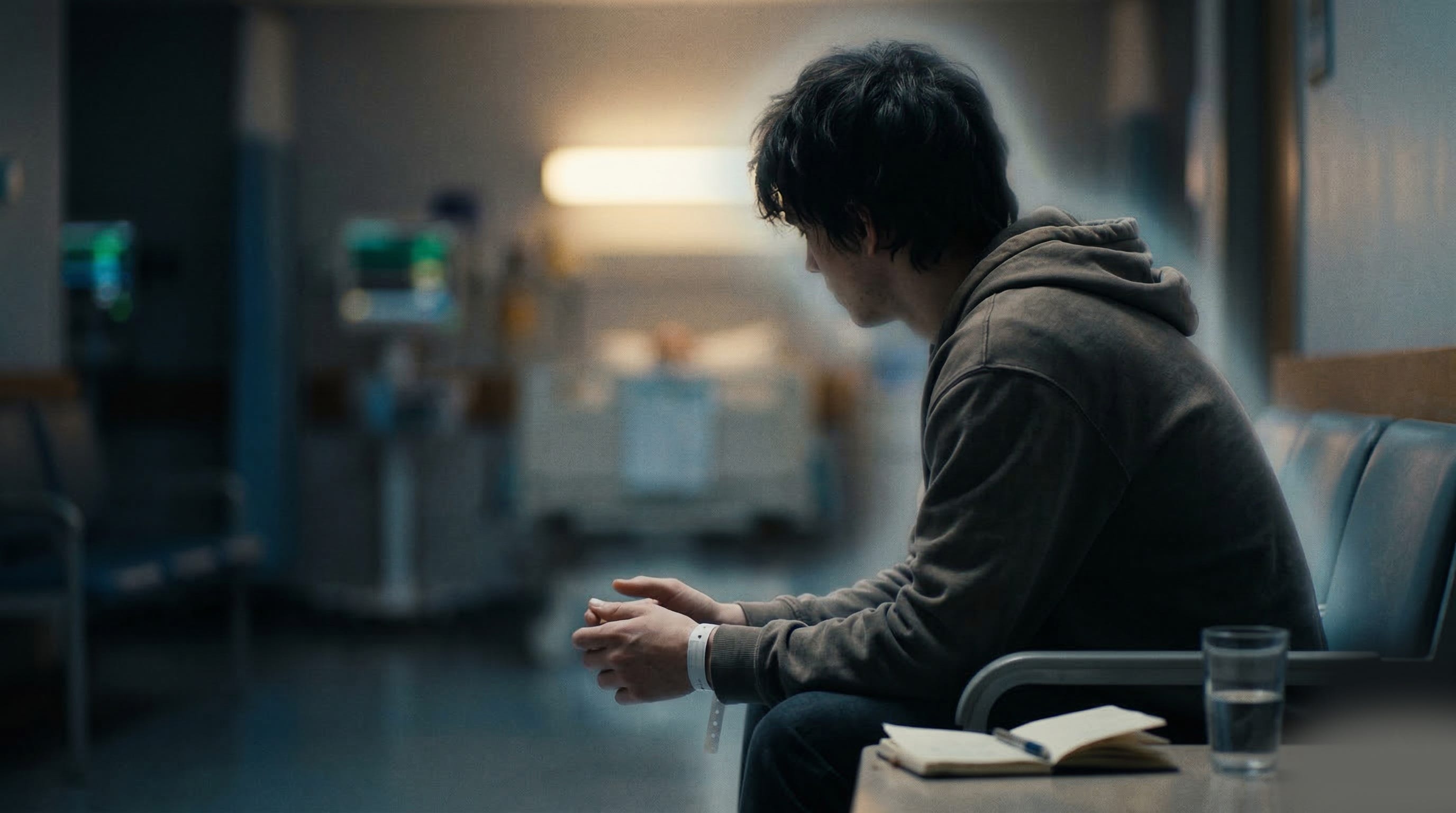
I couldn’t breathe. I was 21. It was my birthday party. And suddenly I was in an ambulance.

I couldn’t breathe.
My family was around me. People were celebrating. My father made a toast.
And my mum’s face was going blurry.
The laughter dissolved into a high-pitched tone that fills your skull and leaves nothing else.
I was 21. It was my birthday party. And suddenly I was in an ambulance, unsure whether I was going to make it to 22.
My body resigned without telling me first.
The Instructions I Was Given
I was 20 and inhaling hustle culture like oxygen.
I watched every founder documentary I could find, listened to podcasts about waking up at 4 AM, and read every story about someone who dropped out and built something real.
I told my parents I was leaving university to start a business. My mum tried to hide her tears. She asked why.
Because that’s what successful people do.
I meant it. And underneath it, I knew it was wrong. I wasn’t called to what I was building, only to the image of myself building it. I buried that voice under 16-hour days and the satisfaction of outworking everyone around me.
I outworked my competition. My business partner. And eventually, myself.
The Brake They Forgot to Include
Here is what nobody tells you about hustle culture: it works, in a narrow, specific, catastrophic sense.
It produces output, momentum, and something that looks like progress from the outside. What it doesn’t produce is a way to stop. And that’s not an oversight. It’s the design.
You are told that discomfort is resistance. That the voice saying this isn’t right is fear. That stopping is what separates the people who make it from the people who don’t.
So you don’t stop until your body stops for you.
What the Industry Can’t Afford to Tell You
I woke up in a hospital room full of beeping machines, faded out again, and had the best sleep of my life.
When I came around I felt something I hadn’t felt in months. I felt like myself. No notifications, no deliverables, and nothing to perform.
The hustle content I’d consumed for a year had one promise: suffer enough and you’ll be rewarded. It presented the suffering as the price of the prize. What it never mentioned is that the suffering is the product.
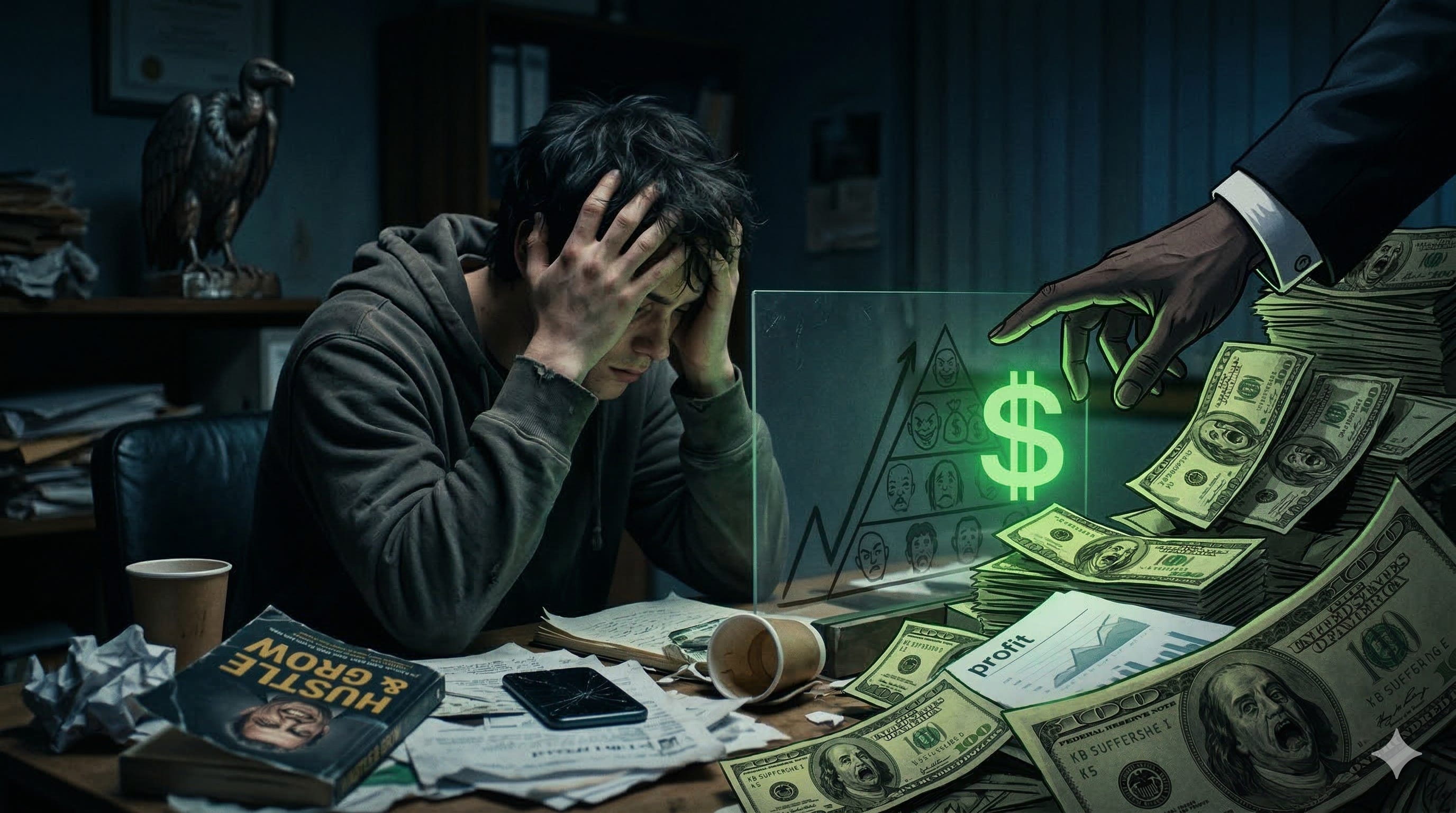
The business model doesn’t need you to succeed. It needs you to almost succeed.
You buy the course. You try for two weeks. It’s harder than it looked so you stop. The shame feels deserved because you did stop, didn’t you? So you buy the next one, with a stronger guarantee and a better founder story.
And so on, and so on.
The people who never fully apply the advice are the engine. Perpetually falling short, perpetually buying the fix for the discipline problem they’ve been convinced they have.
The people who apply it all the way, the way I did at 20, burn out and leave. An acceptable loss. A rounding error on the spreadsheet.
The hustle industry needs you to be convinced that you haven’t worked hard enough yet. That is the one thing it cannot survive you discovering.
The First Honest Conversation
What I remember most clearly from that hospital room is the quiet.
For the first time in a year, nothing was required of me. My body had removed the option, and in doing so had given me back something I didn’t know I’d lost.
The hustle culture calls that hitting rock bottom. A temporary setback on the way to the breakthrough.
I call it the first honest conversation I had with myself in a year.
You don’t have to go to the ER to have that conversation. But you might need to be willing to hear what you already know.
'The business model doesn’t need you to succeed. It needs you to almost succeed.'
Ooft!